Myanmar/Burma – Mrauk U
Back to Burma! And a long boat ride toward Mrauk U, once the center of a grand kingdom.
I imagine some of you are wondering how and why this happened. I mean, I was here in January and saw four major sites, did a day-long train trip and had a great time. So why go back? Well, I had a tremendous trip in January and after planning the three weeks in Vietnam, I realized that I would have about 10 days before I planned to be in Sri Lanka.
I narrowed it to a few ideas – some time in southern China, maybe a few more days in Indonesia to see this inland lake I was interested in, and a return to Burma, so that I could see another site of multiple temples and ruins that is rather difficult to get to. Burma won out. The decision was also helped by the craziness of frequent flier programs – I had some miles in a secondary program I don’t use very much and it surprisingly had Myanmar and Sri Lanka in the same region, so I was able to get flights into and out of Yangon using miles, making it more economical. And I’m very glad it did.
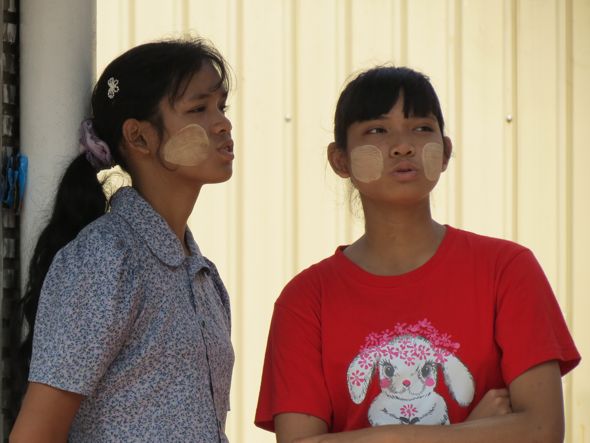
I was initially concerned that my travels through India, Laos and Vietnam may cause me to rethink my initial enthusiasm for Burma, by perhaps grouping it with the sea of “otherness” that I have been living these past few months, minimizing its distinctiveness. That was not the case. From the men in their longyi, the women with the sandalwood painting their faces a yellowish tint, to the laid-back rhythm of the place, Burma is about as far from Vietnam as you can imagine.
Also, photography has been a big part of this journey, and though I’ve cherished many places and images so far, the ones I took the first time in Burma were among my favorites. I worried that I wouldn’t have such a positive experience the second time, but I certainly did.
And yet, things are already changing. The currency has been allowed to float officially, and despite the continued insistence on pristine bills, there was a relaxed feel to the enterprise that didn’t exist in January. Prices have also increased. The newish budget hotel near the embassy district that I stayed at for $40/nt in January was now $80, though I did find a new alternative downtown place for $60. Incredibly, one of the most expensive places in town, the Governor’s Residence, was listed at $472/nt, and that is before taxes, service charge and a hefty credit card usage fee, presuming you didn’t want to lug around $10K or so in cash.
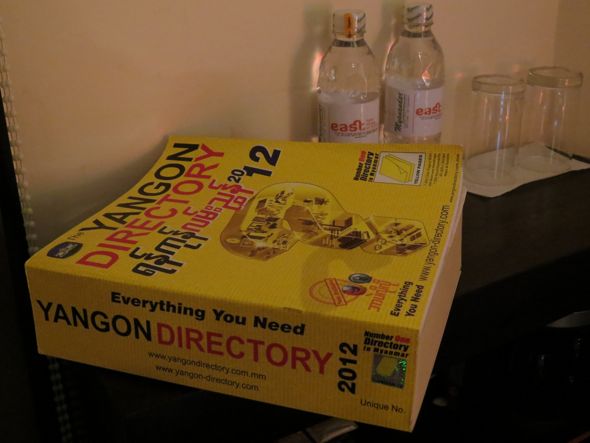
Still, I arrived back in Yangon knowing that one of the great pleasures of being able to come back is that you see things differently the second time around. In Yangon I didn’t bother with the pagodas, the crumbling colonial buildings or the river. For me, it was all about the experience — my favorite samosas at a downtown tea shop; getting to see a film in a bone-chilling, pitch black theater for $1 as the Burmese loudly cracked open sunflower seeds; shopping for photo greeting cards for a friend. Change is everywhere, but for the time being you are still in a time warp — loved this thick yellow pages book, first I’ve seen in years.
The rains are approaching in some parts of Asia, but that means the heat is at its most unrelenting. Yangon in particular was brutal – reaching 41 and 42 Celsius – or about 105 to 108 during the day. When the sun finally drops below the horizon, you can almost feel the weary, steamy city exhale. I certainly did, and enjoyed the breeze at an outdoor restaurant next to my hotel.
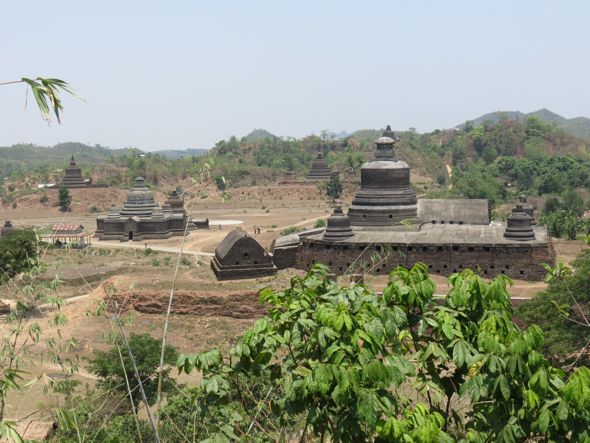
After getting my bearings in Yangon, I set off on my adventure, which was to see the ancient city of Mrauk U. Once, Mrauk U was one of the leading cities in Asia, capital of the Arakanese Kingdom from the 15th to 18th centuries, serving as a significant port of trade and controlling much of India and Bangladesh. Travelers called it a “second Venice” and compared it favorably to London and Amsterdam. But today it’s little more than a quaint village, a lower level administrative center for the surrounding area, but still loaded with 500+ year old temples.
Comparisons with Bagan, the massive temple plain I described in January, are inevitable. But Bagan has many more temples, a much more ambitious restoration and construction program, and is solidly on the tourist trail. Mrauk U, by comparison, is a smaller site, and the temples blend with the low rises and hills throughout the village. And it is definitely a living village. Homes are dotted along the roads amid the temples, and as you make your way to the different sites, you are immersed in the rhythm and pace of their daily lives. It is a very different experience from Bagan, where an entire town was moved wholesale to clear space.
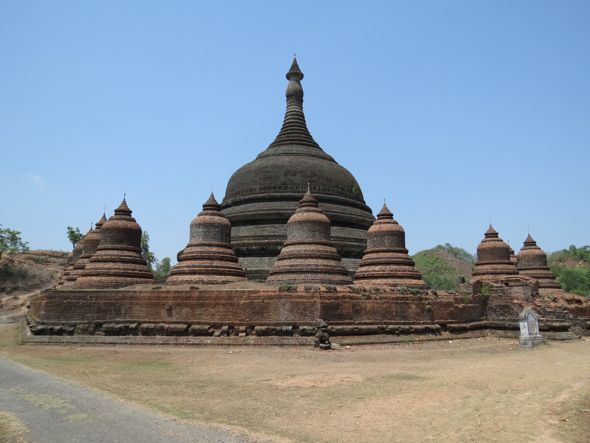
This proximity of the village, coupled with my own isolation, was a bit jarring at first. I mean, you always see locals on your travels, it’s part of the adventure, but here they didn’t have any souvenirs to sell you, or tours to offer or even postcards to peddle.
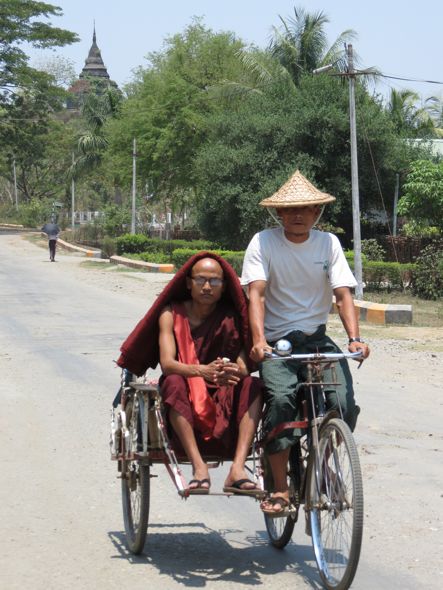
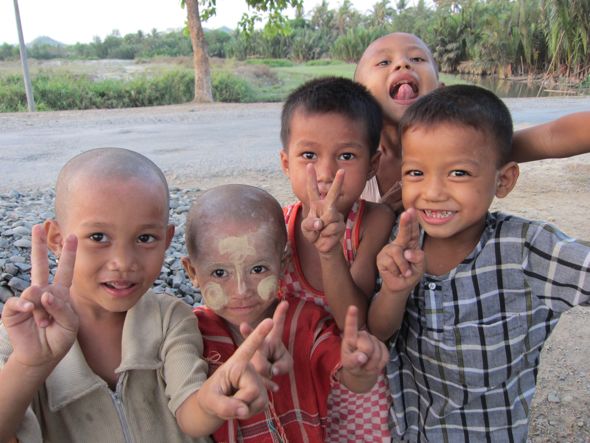
As you know, I’m pretty cynical by nature, but after four days of children and adults wildly waving and giggling as you responded, it was hard to be but overtaken by the spirit of the place. The interaction seemed more direct, less studied than in other places I visited. Burma is the place I took more pictures of people than any other. I walked out at sunset and this group of kids was reveling in the fact that the heat had broken. They posed and played to camera and loved seeing their images, with much ribbing of the friends they thought didn’t look cool enough.
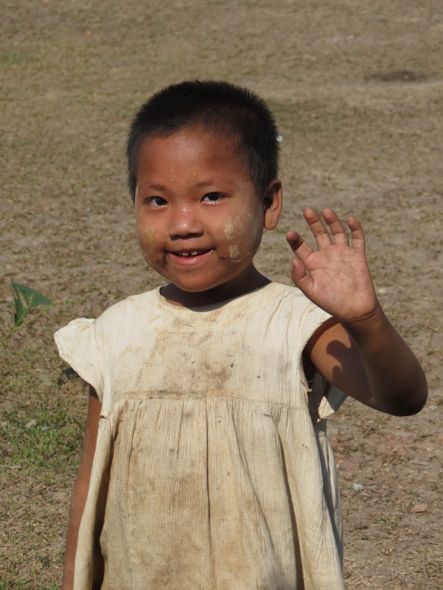
And I did see this one little girl who walked away from her friend and started waving wildly at me. So cute.
I went to one site that was literally at the end of a line of temples. I almost didn’t go, as it was a small structure, the sun was at its peak and I had run out of water, which was a rather significant concern. But I struggled on, and was dumbfounded to see a man there, trying to sell some stone engravings. They were kinda nice, and small enough to pop in my bag so I bought some. But the best was his little baby boy, who was completely fascinated by the camera and his image in the viewfinder.
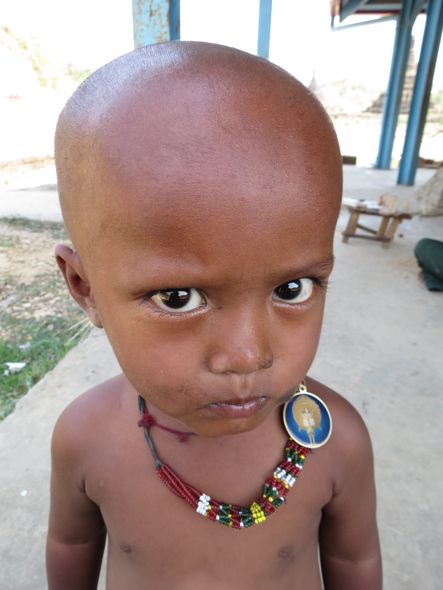
Unsurprisingly, Mrauk U is also difficult to get to, requiring two flights from Yangon, two long boat rides and often days of transit. It’s a beautiful trip up though.
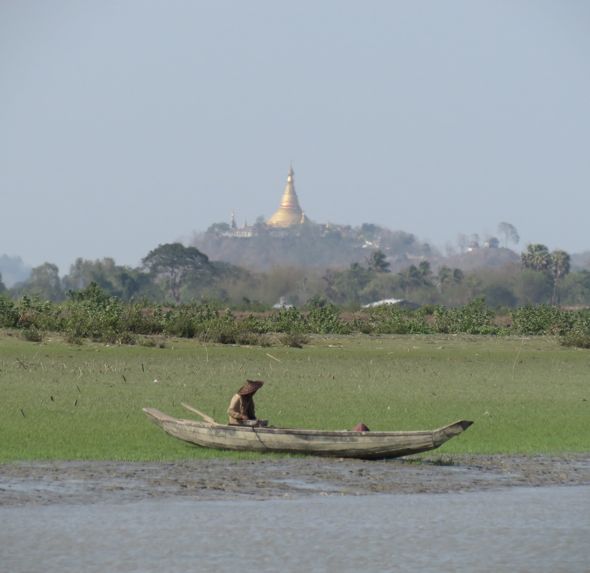
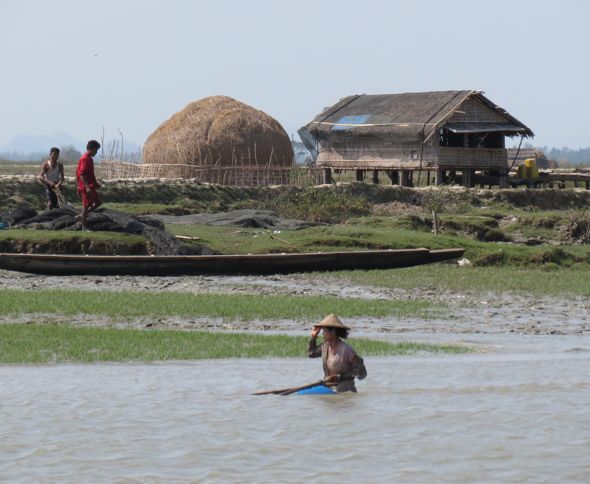
Tourists are the exception, not the rule here. In a good year, they get about 4,000 Western tourists, and the overwhelming majority come during the high season, November to February. In the four days I was there, I saw a total of four Westerners, and I was essentially alone at every temple site, save for a few Burmese and an occasional sleeper. Check out this guy I saw one deliriously hot afternoon – he was looking for a place to escape.
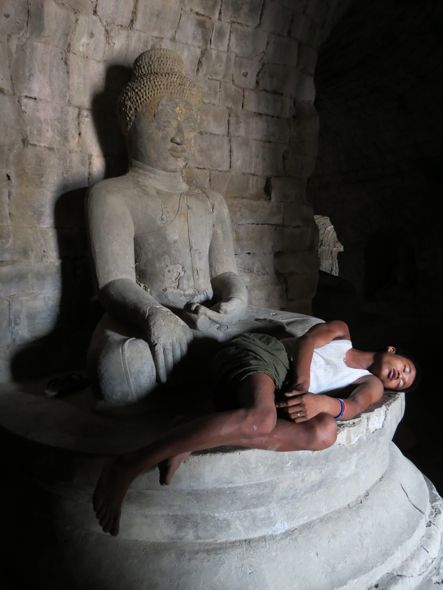
And boy was it hot. Suffocating, stroke-inducing, enveloping heat. It’s clear why there is a high tourist season, and unfortunately it was not during my visit. I had planned for it, deciding to spend an extra day in Mrauk U so that I could take things slowly, but it was still very difficult. The tiles and the stones at the temples during the day were scalding, and remember that you have to be barefoot. It was like getting a fire-hot stone treatment. At one place, I had to give up. The tiles were boiling, so I walked on the ground, which was even hotter. There was almost no grass, except for a few patches with burrs. I got to the opposite side of the structure and then had to hightail it back. I think I literally burned myself. My feet tingled the rest of the day.
Luckily, there was a respite, although it presented a danger of another sort. Rain! I knew that by staying in Asia til June that I risked running into the rainy season. Despite the humidity and the sloshing and sliding about, I was intrigued to see the monsoon rains. I’ve certainly seen similar downpours — in Ecuador we’d get sheets of rain like clockwork every morning and afternoon for weeks on end — but thought that Asia would be a new experience. They haven’t arrived yet, but we got the warning shot of “first rain” my last two days in Mrauk U.
And the rain, arriving when it did, served to remind me about another aspect of Burmese distinctiveness. Much of my life – our lives – focuses on maximizing time. The extra few minutes we get to read while on the bus, eating or listening to news in the car, checking things online while ostensibly watching TV. Burma clashes with that, determinedly so. And I never felt it as fully than when sitting through a rain day in Mrauk U. It wasn’t a loss, as I’d already seen the temples on my list, was using the day to see some of the more far-flung sites and had already gotten a look at a nice sunset.
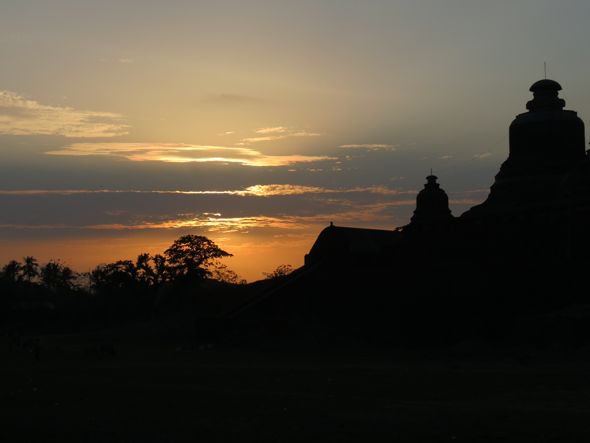
But the rain started during breakfast and didn’t let up. So with no internet, no newspapers, and no TV, I relied on my Kindle and the roadside stands where I sought refuge from the rain. Not much to do but watch time go by. Not to be too reductive, but I think that informs the national character in some way – no rush, no drama, there are greater forces at work.
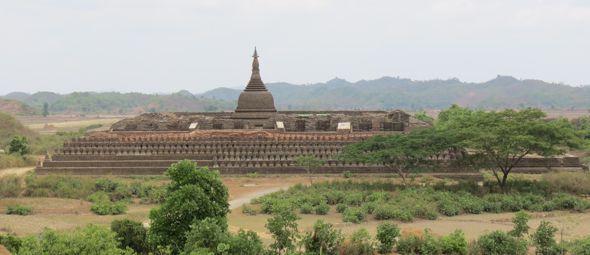
Mrauk U doesn’t offer the theatricality of Bagan, where you can climb many of the temples, and the open plain lends itself to breathtaking vistas. Mrauk U is quieter, more tranquil, certainly more isolated, but also delivers in its own way. I’ll admit, I didn’t quite get it the first day. I was jarred by the proximity of the village, and at first glance the Northern group of temples, which offers the most concentrated attractions, seemed like a mini-me version of Bagan — pretty, but not awe-inspiring.
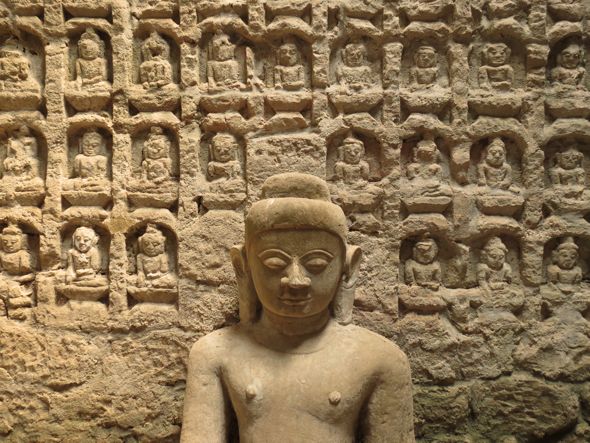
But that began to change as I went to one of the temples there, which has a very intricate sculptural program.
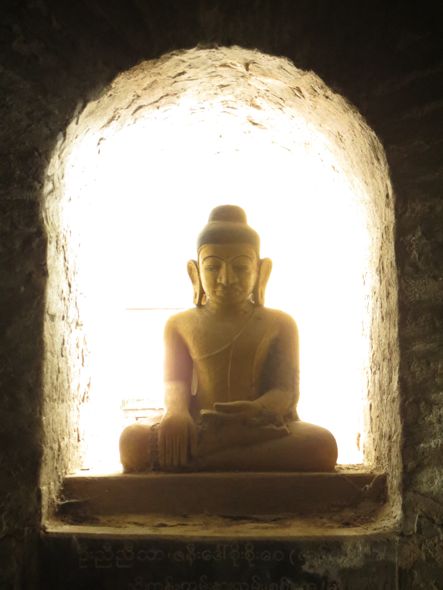
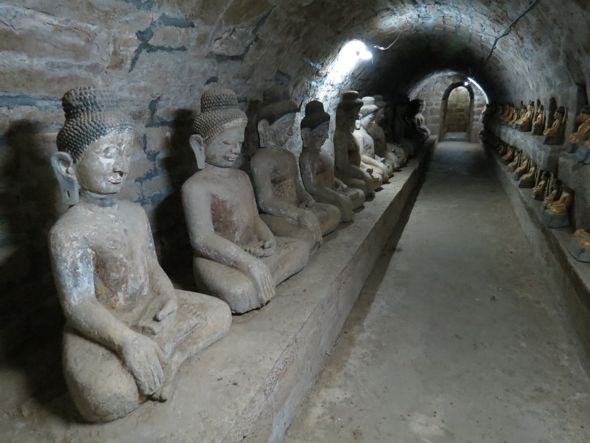
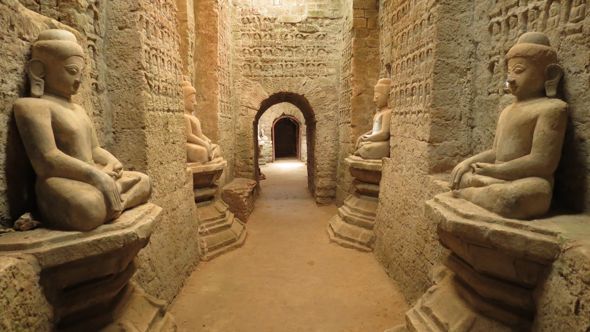
And the morning of the second day I was completely blown away at Kothaung Temple. The interior sculpture was superior to anything I saw in Bagan. And the tranquility of the place – wandering through there for an hour, save a local monk, was breathtaking.
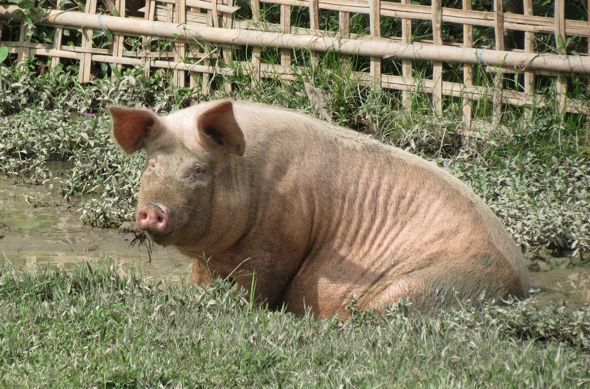
Continuing my unexpected interaction with animals, I found quite a few of my Chinese calendar brethren in Mrauk U. Here is one guy who was enjoying a nice slosh through the marsh.
On balance, again, if you are thinking of a trip to Myanmar, do it soon. It is a special place, and definitely merits further inquiry. I hope to be able to return.
 WHERE IS JAVIER?